SARFinder
The platform responders and researchers use to find, request and track SAR imagery over a disaster. It searches the Sentinel-1 acquisition plan, dispatches processing jobs to Airflow, and surfaces GDACS events as they happen — Django and Celery behind a CesiumJS globe.
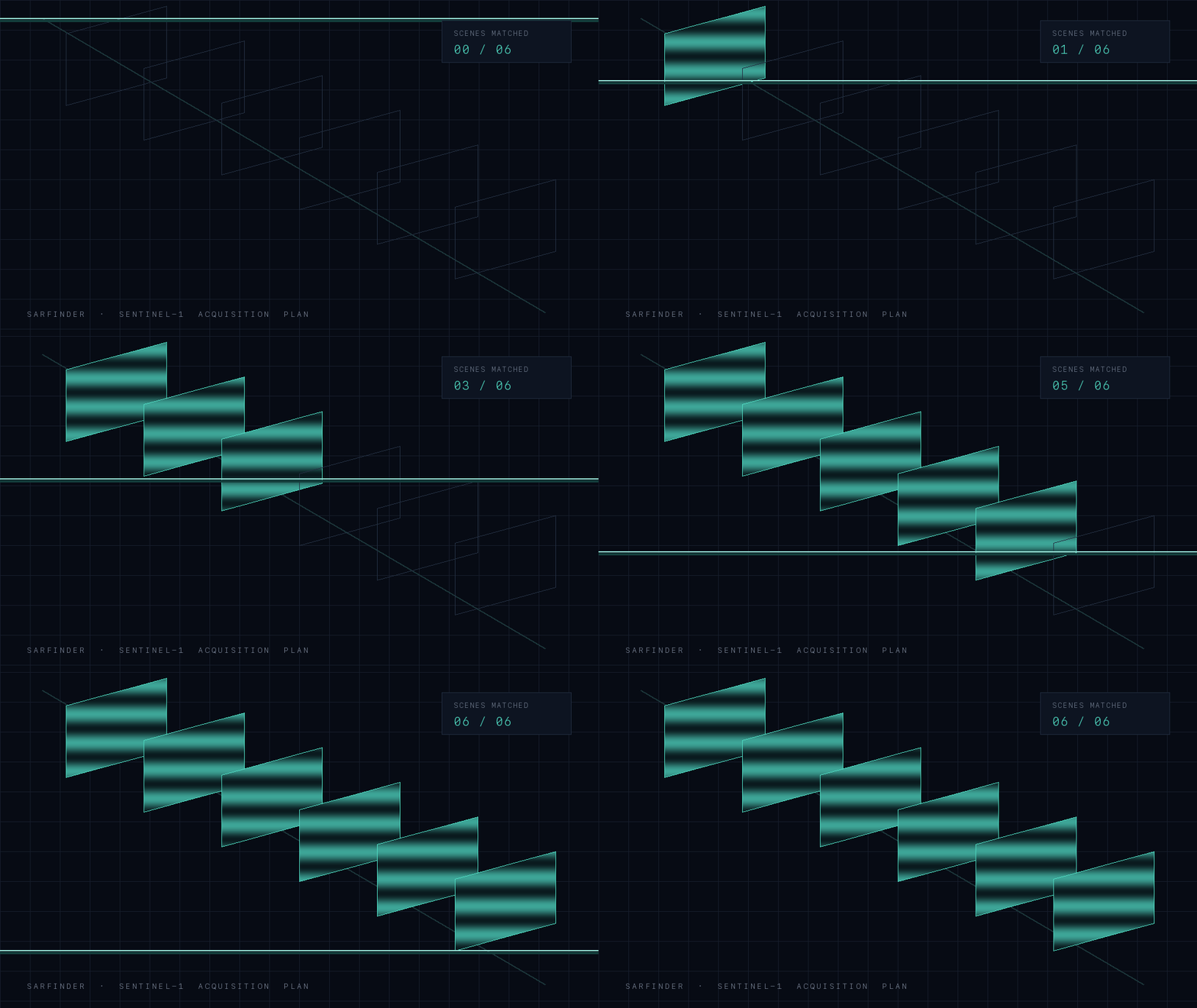
SARFinder
When a flood or an earthquake happens, the first question is always the same: has a radar satellite already looked at this place, and when will it look again? SARFinder answers it. It sits at sf.earthobservatory.sg and gives the lab one place to search the Sentinel-1 acquisition plan, request processing over an area of interest, and watch the resulting products land.
Search that knows what is coming
The catalogue is not only what has been acquired. Scheduled jobs keep the Sentinel-1 acquisition plan, datatake status and SAR-MPC disclaimers current, so a search covers future passes as well as past ones — the difference between no data and data in eighteen hours.
From a drawn polygon to a running job
An area of interest becomes an Airflow submission. The backend reconciles what it dispatched against what actually ran, so the job list reflects the cluster rather than the last thing the UI was told. Finished ARIA-SG products are read out of S3 with their thumbnails and tiles, and event detection groups them against the disaster they belong to.
Alerting
GDACS alerts are ingested and matched against coverage, which is what turns the platform from something you visit into something that tells you to look.
Stack
Django 5.1 and DRF on Python 3.11, PostgreSQL and Redis, Celery worker and beat on the database scheduler, and GDAL, geopandas, shapely and rasterio for the geometry and raster work — all of it in Docker, with no supported bare-metal path. The frontend is React with CRACO (CesiumJS needs the webpack customisation), TanStack Query for server state, React Router v6, and Cypress end to end.
Ten Django apps carry the rest: the scene catalogue, S3 access, accounts, usage analytics, eco-integrity tiles, admin job triage, feedback, and emergency-response uploads.